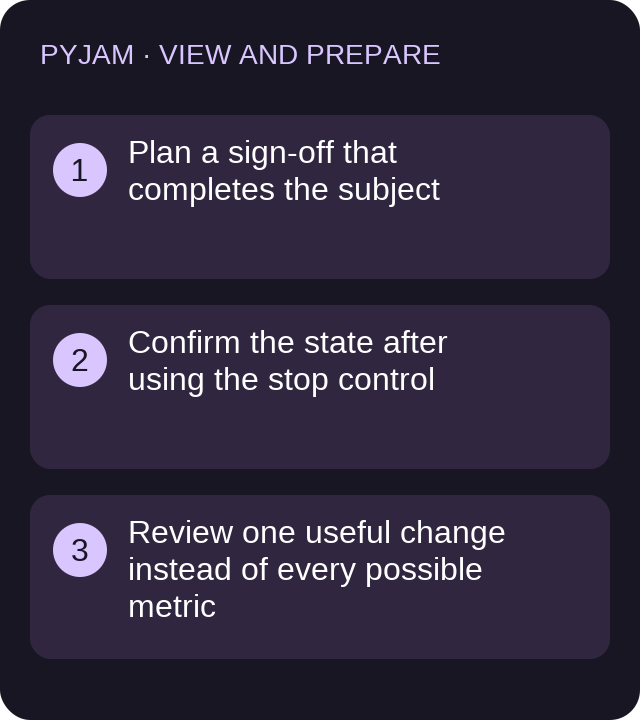
Plan a sign-off that completes the subject
Name the main thing the session covered and tell the audience that you are about to end. If questions remain, explain only the follow-up you can actually provide. Avoid promising a replay, another platform, or a future event simply to fill the final moments. Put any relevant next step in plain language. If another person is involved, agree on the cue that ends the conversation so the presenter does not keep speaking while the operator assumes the session is finished. A short, clear sign-off is enough when it completes the promise made in the opening.
Confirm the state after using the stop control
Follow the selected service's current ending procedure and check the state shown afterward. A viewer closing the video or a phone screen going dark does not establish that the sender has stopped. Keep private conversation away from the camera and microphone until you have confirmed the ending. Before a Pyjam session, review the creator options and requirements so that the closing step is not something you discover under pressure. This guide does not claim that every platform uses the same label, confirmation, or recording behaviour. Rehearse the ending through the tools you will actually use.
Review one useful change instead of every possible metric
Write down what made the session easy or difficult to follow. Examples include a microphone that became distant during a demonstration, an unclear handover, or a title that promised a different subject. Use only the feedback and metrics the destination actually provides. A click, a player opening, and someone understanding the content are different observations. If a replay exists and you have appropriate access, inspect a short section relevant to the issue rather than assuming the whole recording is available. Choose one practical change for the next rehearsal, record the setup that produced it, and preserve the parts of the session that already worked.