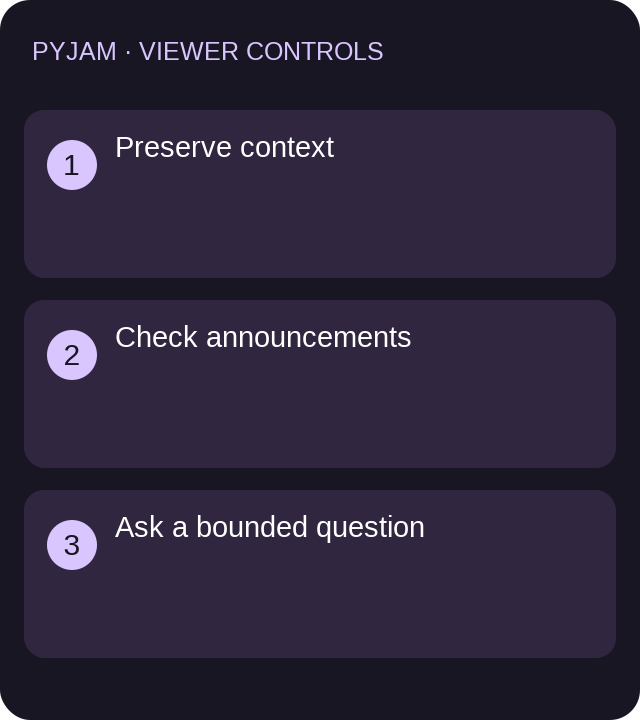
Preserve context
Keep creator, subject, date and original link. Read current channel or event status. Look for an explicitly labelled recording or update. Check the publisher before accepting a similarly titled upload. An old thumbnail is weaker evidence than the selected item's status. Preserve the original reference so a later recording can be distinguished from an unrelated replacement explanation.
Check announcements
Read public information on availability or editing. Do not promise universal waiting periods. Note an error without declaring deletion. Use ordinary navigation, avoiding unknown downloads and unrelated mirrors. A player failure and a choice not to publish are different possibilities. Keep what the organiser announced separate from what one failed visit suggests, especially when the viewing route changed after the event.
Ask a bounded question
Where appropriate, ask if the named session will have a replay and where. Do not request private access. Label other explanations as alternatives. Keep a later upload distinct when sharing notes. One unsuccessful search cannot establish a retention policy, and a channel containing some recordings does not prove this particular session will eventually appear there.
Replay note
Write creator, date, original link, status, explicitly offered recording and uncertainty. Example: the session ended and no public replay was found through this page. This avoids inventing deletion rules and leaves enough context for a useful later check without repeatedly guessing new addresses.
Try the check in Pyjam
Open Pyjam and choose an available public video. Apply the viewing check above to that item, keeping its live or recorded status in mind. Availability and controls should be checked in the current session.
Explore Live Streams in Pyjam