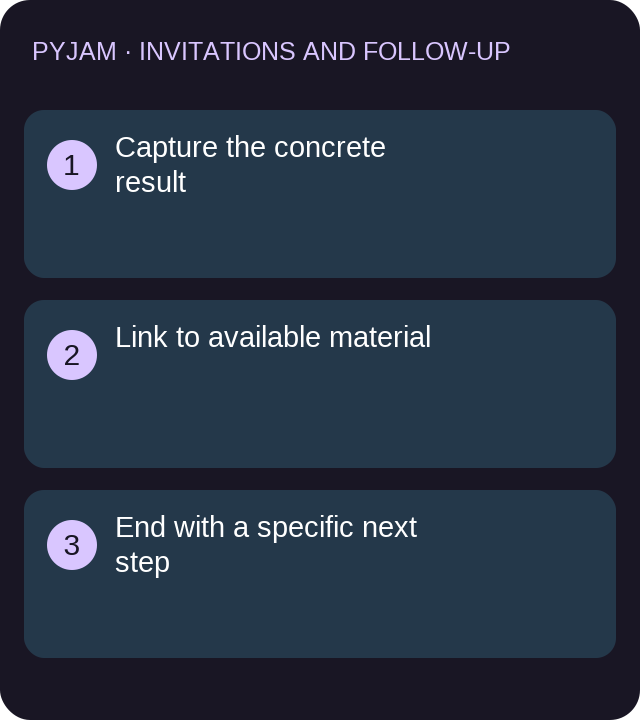
Capture the concrete result
Name the task, important steps and conclusion. Include corrections made during the session. Do not turn a tentative observation into a claim covering every device or audience. Omit internal production problems unless they explain something viewers encountered. Keep enough context that a reader understands the starting conditions instead of treating the result as a universal recommendation disconnected from the demonstration.
Link to available material
Check a published recording or supporting note before linking. A live address may lead elsewhere after the session. Do not promise indefinite replay availability. With no recording, make the recap useful alone. Describe essential visual changes and unresolved questions in words rather than repeatedly pointing readers towards a video they cannot actually open. Preserve the distinction between a recap and a full transcript.
End with a specific next step
Point to the next explanation or a chance to try the task. Keep the invitation connected to the result. For a Pyjam follow-up, use the appropriate viewing or preparation route and explain what to check there. A click does not prove watching or broadcasting. Review the recap against the actual session notes before publishing so planned but omitted material is not presented as completed.
Try the check in Pyjam
Open Pyjam’s preparation route and inspect the available setup before choosing to broadcast. Use the rehearsal above to decide what to check; opening the app alone does not start or confirm a public session.
Prepare a Stream in Pyjam