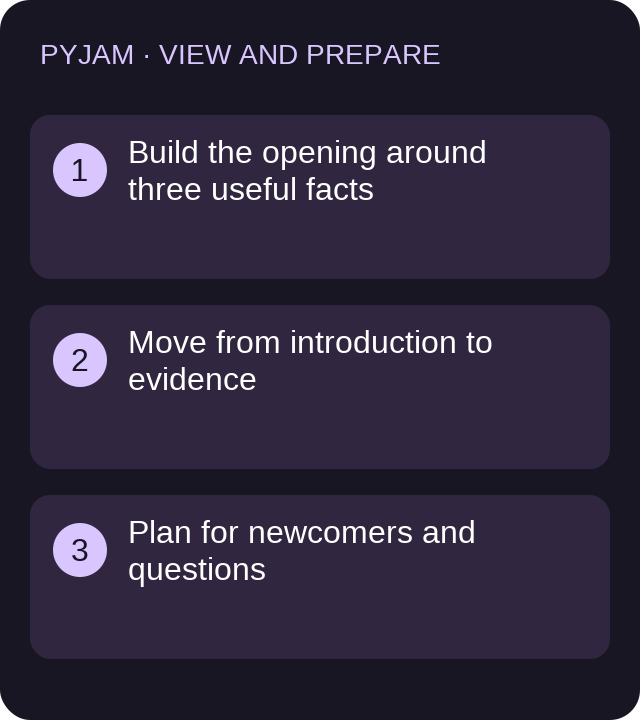
Build the opening around three useful facts
Name the subject, the immediate activity, and what the viewer should expect from this session. For example, a creator explaining a small repair can identify the object, show the first step, and say that questions will be considered after the demonstration. Write those facts in language you would naturally use aloud. Avoid a generic welcome that could belong to any broadcast. If the subject depends on a place, give appropriate scene context without revealing unnecessary private location details. A viewer who arrives for the first time should be able to follow the premise without knowing your earlier sessions.
Move from introduction to evidence
Rehearse the transition from saying what you will show to actually showing it. Place the object or scene where it can be seen without a long search. Check whether the first important sentence is audible at the planned microphone distance. If another speaker is involved, agree on a simple handover rather than leaving both people waiting for a cue. The introduction can be brief while still giving enough orientation. Choose one clear first action and remove sentences that repeat the title without adding context or showing the subject.
Plan for newcomers and questions
Some viewers may arrive after the opening, so prepare a short recap you can use at a natural pause. If the destination supports the interaction you need, explain when you will look at questions; do not promise immediate replies while your hands and camera are occupied. In Pyjam, review the creator-area options and requirements before the announced start. Opening that area is preparation, not the beginning of transmission. After the rehearsal, ask a helper to describe what they thought the session would show. If their answer differs from your intention, improve the opening rather than adding more promotional language to the invitation.