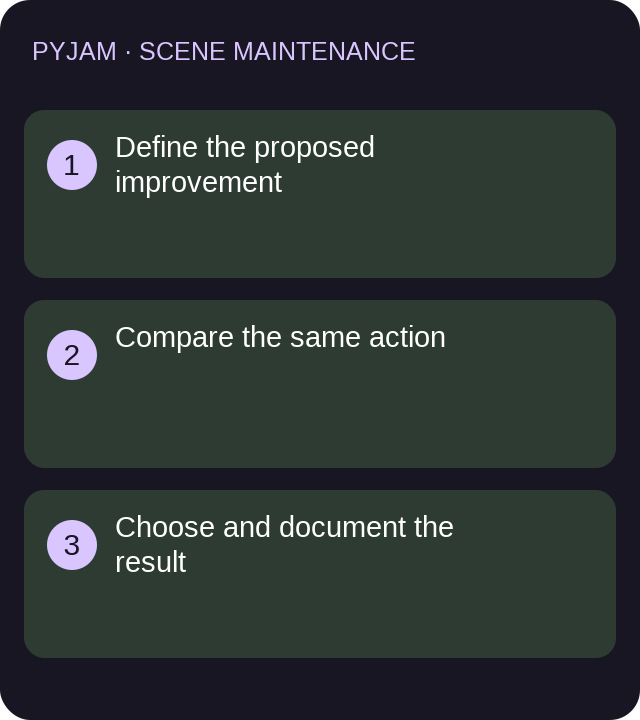
Define the proposed improvement
Name one audience problem, such as a hidden label or a cramped demonstration area. Save a reference of the working view and create a clearly identified rehearsal alternative using the controls available in your setup. Inspect whether its sources are shared or independent before editing their content or settings. A copied composition can still refer to material used elsewhere, so the word duplicate alone does not establish isolation.
Compare the same action
Perform the opening, widest movement and finished result in both views. Inspect the recordings at the size the audience is likely to use. Check the original view after the trial, particularly when changing a source's properties. Keep the alternative only if it solves the named problem while preserving essential context. Record a concrete observation rather than accepting the version that merely looks newer or more elaborate.
Choose and document the result
Mark which view is approved and which remains a rehearsal candidate. Update the running order only after checking the transition into and out of the chosen view. Keep a reversible path back to the working arrangement. Avoid removing an older source or media file until you know whether another view depends on it; scene appearance is not a complete inventory of those dependencies.
Change trial sheet
Record audience problem, working reference, shared-source observations, candidate adjustment and comparison result. Example: the larger label helps but the final tool movement is cropped. Revise the candidate and leave the working view available. A tested change should have an identifiable benefit and a verified return path, not simply a renamed copy.
Try the check in Pyjam
Open Pyjam’s preparation route and inspect the available setup before choosing to broadcast. Use the rehearsal above to decide what to check; opening the app alone does not start or confirm a public session.
Prepare a Stream in Pyjam